The Best Time to Visit Hawaii, Season by Season
By America Experiences Editors · Published August 16, 2026 · Updated August 27, 2026 · 8 min read
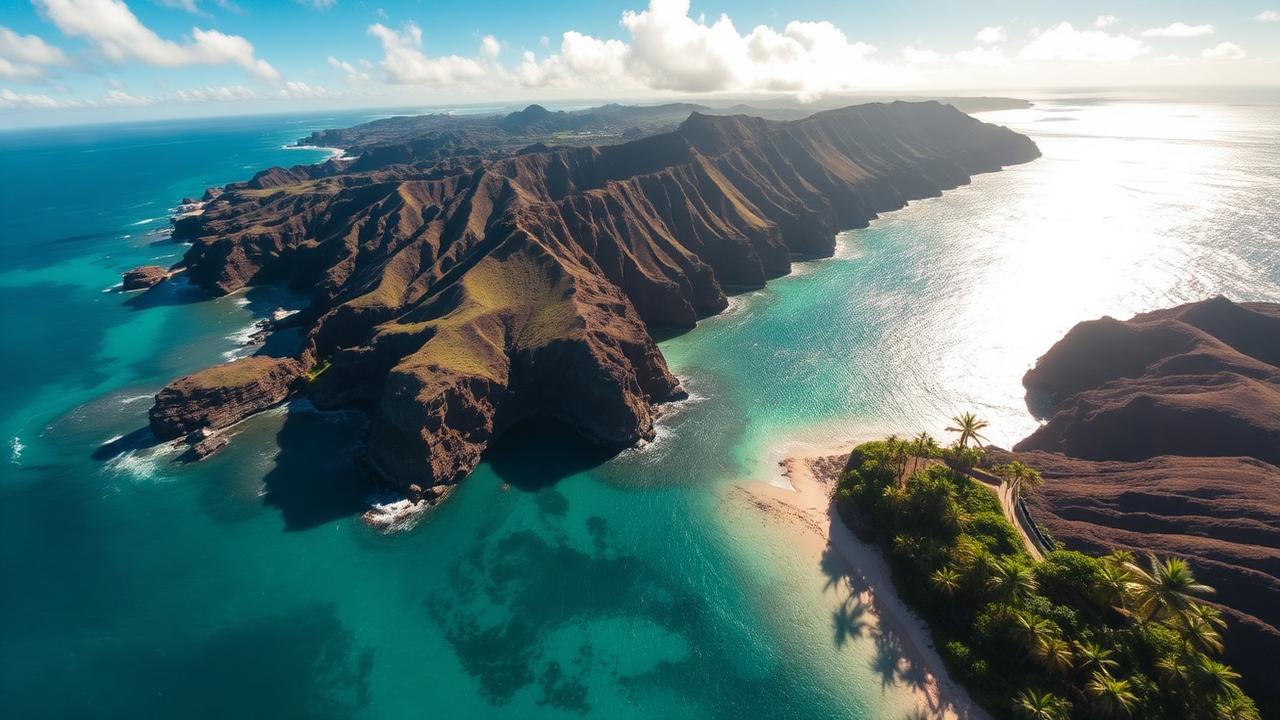
There is no genuinely bad month to visit Hawaii — the islands sit deep in the tropics, so daytime temperatures stay in a narrow band all year. What actually changes is rainfall, ocean conditions, crowd levels and price, and those four things move on different schedules.
The short answer: April to early June and September to mid-November tend to combine settled weather with the thinnest crowds. Choose December to March instead if humpback whales or big north-shore surf are the point of the trip, and expect the busiest, priciest weeks around the winter holidays and mid-summer.
Verified seasonality data · primary sources only
Hawaii month by month, from the agencies rather than from opinion
Every figure in this section was read on the issuing agency’s own publication on . Climate figures are NOAA 1991–2020 normals at a named station; crowd figures are the State of Hawaii’s own visitor counts. Nothing here comes from an operator, an aggregator or a booking site.
Which months are actually busy, measured
Statewide visitor arrivals by month, 2024, from the Hawaii Department of Business, Economic Development & Tourism. DBEDT labels these figures preliminary, so we do too. This is a count of arrivals, not an occupancy or price index.
The busiest month, July (925,935 arrivals), brought 31% more visitors than the quietest, September (707,486). The spread across the whole year is narrower than most “avoid peak season” advice implies — Hawaii does not empty out in any month.
- Jan763,480
- Feb772,480
- Mar855,537
- Apr753,551
- May763,260
- Jun872,620
- Jul925,935
- Aug819,152
- Sep707,486
- Oct774,617
- Nov770,940
- Dec910,055
Source: Monthly visitor statistics news releases (preliminary), 2024
Oʻahu
NOAA 1991–2020 monthly normals at Honolulu International Airport (station USW00022521). A dry leeward south-shore station. It represents Waikiki and the airport side, not the wetter Windward coast or the North Shore.
| Month | Avg high | Avg low | Rain |
|---|---|---|---|
| JanJanuary | 80.5° | 66.8° | 1.84″ |
| FebFebruary | 80.5° | 67.1° | 1.94″ |
| MarMarch | 81.2° | 68.1° | 2.36″ |
| AprApril | 83.1° | 70.1° | 0.77″ |
| MayMay | 84.8° | 71.5° | 0.82″ |
| JunJune | 86.9° | 73.8° | 0.50″ |
| JulJuly | 88.1° | 75.1° | 0.52″ |
| AugAugust | 88.8° | 75.6° | 0.84″ |
| SepSeptember | 88.4° | 74.8° | 0.88″ |
| OctOctober | 86.9° | 73.9° | 1.51″ |
| NovNovember | 84.1° | 71.8° | 2.25″ |
| DecDecember | 81.8° | 69.2° | 2.18″ |
Maui
NOAA 1991–2020 monthly normals at Kahului Airport (station USW00022516). Central-isthmus station. Reasonable for Kahului and broadly indicative of the dry side, but it is not Hana, which is far wetter, nor upcountry Haleakalā, which is far cooler.
| Month | Avg high | Avg low | Rain |
|---|---|---|---|
| JanJanuary | 82.2° | 63.6° | 2.42″ |
| FebFebruary | 82.2° | 63.8° | 2.00″ |
| MarMarch | 82.9° | 65.1° | 2.64″ |
| AprApril | 84.5° | 66.6° | 1.32″ |
| MayMay | 86.5° | 67.7° | 0.71″ |
| JunJune | 88.3° | 70.3° | 0.17″ |
| JulJuly | 89.2° | 71.8° | 0.53″ |
| AugAugust | 89.9° | 72.3° | 0.53″ |
| SepSeptember | 90.0° | 71.2° | 0.45″ |
| OctOctober | 88.7° | 70.1° | 0.83″ |
| NovNovember | 85.8° | 68.4° | 1.81″ |
| DecDecember | 83.3° | 65.9° | 2.80″ |
Kauaʻi
NOAA 1991–2020 monthly normals at Lihue Airport (station USW00022536). East-side station. Kauaʻi's north shore is materially wetter than these figures and Mount Waiʻaleʻale far wetter again; the south shore around Poʻipū is drier.
| Month | Avg high | Avg low | Rain |
|---|---|---|---|
| JanJanuary | 78.6° | 66.0° | 2.78″ |
| FebFebruary | 78.1° | 66.2° | 3.63″ |
| MarMarch | 78.5° | 67.3° | 5.61″ |
| AprApril | 79.8° | 69.5° | 2.03″ |
| MayMay | 81.6° | 70.9° | 2.18″ |
| JunJune | 83.3° | 73.4° | 1.79″ |
| JulJuly | 84.6° | 74.6° | 1.75″ |
| AugAugust | 85.2° | 75.2° | 2.33″ |
| SepSeptember | 85.3° | 74.8° | 2.18″ |
| OctOctober | 83.9° | 73.6° | 3.27″ |
| NovNovember | 81.2° | 71.3° | 4.03″ |
| DecDecember | 79.1° | 68.6° | 4.64″ |
Hawaiʻi Island (Hilo side)
NOAA 1991–2020 monthly normals at Hilo International Airport (station USW00021504). Windward station, and the wettest in this table by a wide margin. It does NOT represent the Kona coast, where most resorts are and where rainfall is dramatically lower. We do not publish a Kona column because we did not verify a Kona station in this pass.
| Month | Avg high | Avg low | Rain |
|---|---|---|---|
| JanJanuary | 78.7° | 64.1° | 7.86″ |
| FebFebruary | 78.4° | 64.1° | 10.22″ |
| MarMarch | 78.5° | 65.2° | 12.68″ |
| AprApril | 79.0° | 66.1° | 9.40″ |
| MayMay | 80.7° | 67.3° | 6.99″ |
| JunJune | 81.8° | 68.7° | 7.30″ |
| JulJuly | 82.8° | 69.9° | 9.24″ |
| AugAugust | 82.9° | 70.4° | 11.30″ |
| SepSeptember | 83.3° | 69.8° | 8.70″ |
| OctOctober | 82.4° | 69.0° | 10.24″ |
| NovNovember | 80.3° | 67.6° | 14.39″ |
| DecDecember | 78.8° | 65.7° | 12.07″ |
The humpback window, in NOAA’s own words
From November through April, visitors to the sanctuary can see whales.
Hawaiian Islands Humpback Whale National Marine Sanctuary — November through April
Humpback whales are present in Hawaiian waters November through May.
Humpback Whale Sanctuary — boating and ocean users — November through May
NOAA's main sanctuary page and its guidance for boaters give slightly different end months, so treat late spring as a tapering tail rather than a reliable sighting window. NOAA does not publish a single peak month on either page, so we do not state one.
Central Pacific hurricane season
Hurricane season runs from June 1 to November 30.
Basin: 140°W to the International Date Line (the Central Pacific basin). A named season is not a forecast of impact — it is the window in which the agency monitors the basin.
Park rules that decide your dates for you
Haleakalā National Park, Maui
Standard entrance pass posted at $15–$30 depending on entry type; Hawaiʻi Tri-Park Annual Pass $55.
A separate reservation is required to enter the summit area between 3:00 am and 7:00 am, in place since February 2017. The reservation itself costs $1 per vehicle and is bookable up to 60 days ahead on recreation.gov, in addition to the entrance fee.
Sunrise at the summit is a booked, capacity-limited slot — not a decision you can make the night before. If sunrise is the reason you are choosing your dates, the reservation window, not the weather, is the binding constraint.
Source: Haleakalā National Park — fees and sunrise reservations
Hawaiʻi Volcanoes National Park, Hawaiʻi Island
Standard pass posted at $15–$30 depending on entry type; Hawaiʻi Tri-Park Annual Pass $55; America the Beautiful annual pass also accepted.
No timed-entry reservation required.
No timed-entry reservation is required, which makes this park unusually flexible in peak months — but volcanic activity and air-quality closures are condition-driven and can change at any time of year, so no month is safer than another.
The National Park Service notes a fee-structure change affecting non-resident visitors that took effect on 1 January 2026. Because the posted amount can move, confirm the current figure on the park's own fees page before you budget — including against this page.
Methodology and what we could not verify
We only publish a figure if we read it on the issuing agency’s own page. These widely repeated Hawaii-timing claims did not clear that bar, so we are not stating them:
A specific peak month or peak months for humpback whale sightings.
NOAA's sanctuary pages state a season window but do not state a peak month. Every 'January to March is peak' figure we found traced to secondary travel sources, so we do not publish one.
An official month range for the winter high-surf season.
The National Weather Service Honolulu office issues High Surf Advisories and Warnings for north-facing shores driven by North Pacific swell, but we could not read a verbatim NWS-stated calendar range. We describe the mechanism and decline to publish month boundaries as if an agency had set them.
Monthly rainfall for the Kona side of Hawaiʻi Island.
We verified a Hilo station only. Publishing Hilo's rainfall as 'Hawaiʻi Island' would badly mislead anyone staying in Kona, so the table names the station and says so instead.
Final, non-preliminary 2024 monthly visitor arrivals.
The monthly figures we cite come from DBEDT's monthly news releases, which DBEDT labels preliminary. The final annual research report may revise them, so the table is labelled preliminary rather than presented as settled.
Average hotel or airfare prices by month.
No government agency publishes a traveller-facing monthly price series we could verify, and operator or aggregator pricing is not a primary source. We use measured visitor volume as the demand signal instead of inventing a price index.
Sources
- US Climate Normals, monthly 1991–2020 — NOAA National Centers for Environmental Information
- Hawaiian Islands Humpback Whale National Marine Sanctuary — NOAA
- Humpback Whale Sanctuary — boating and ocean users — NOAA
- Central Pacific hurricane season summary — NOAA Central Pacific Hurricane Center
- Monthly visitor statistics news releases (preliminary), 2024 — Hawaii Department of Business, Economic Development & Tourism
- Haleakalā National Park — fees and sunrise reservations — National Park Service
- Hawaiʻi Volcanoes National Park — fees and passes — National Park Service
- NWS Honolulu forecast office — NOAA / National Weather Service
Quick answer by travel priority
Rather than one universal 'best' month, work backwards from what you most want to do in the water and on land.
- Calm snorkeling and boat conditions: late spring through early autumn, generally on each island's leeward (west and south) coasts.
- Humpback whales: NOAA's sanctuary states November through April; its guidance for boaters says November through May. NOAA does not publish a peak month, so treat late spring as a tapering tail.
- Big-wave surf watching: winter months on north-facing shores, especially on Oʻahu's North Shore.
- Fewer people and better value: the shoulder windows of April–early June and September–mid-November.
- Hiking and volcano landscapes: any month, though drier spring and autumn weeks mean fewer washed-out trails.
Hawaii's two seasons, explained
Hawaii effectively has two seasons rather than four. The drier, warmer season runs roughly May through October; the cooler, wetter season runs roughly November through April. The difference is modest in temperature and much larger in rainfall and swell.
Winter is when Pacific storm systems send larger north and west swells toward the islands. That produces the surf Hawaii is famous for, and it also means rougher water and more frequent tour cancellations on exposed coasts. Summer swells are smaller and typically arrive from the south.
Trade winds blow for most of the year and are the reason the islands feel comfortable despite the latitude. When trades fade, humid 'Kona' conditions can settle in — more common in winter, and the main reason a Hawaiian day can feel unexpectedly sticky.
Why the island and the coast matter more than the month
Hawaii's weather is intensely local. Each main island has a wet windward side and a dry leeward side, separated by mountains that wring moisture out of the trade winds. Two beaches an hour apart can have completely different weather on the same afternoon.
That is why 'is it rainy in Hawaii in November?' has no single answer. On Kauaʻi's north shore or Hilo on Hawaiʻi Island, rain is a normal part of the landscape year-round. On Maui's south shore around Kihei and Wailea, or Oʻahu's Waikiki, dry days are the norm in almost every month.
Practical takeaway: if you are visiting during the wetter season, weight your plans and your lodging toward leeward coasts, and treat rain as something you drive away from rather than wait out.
- Windward and rainier: Hilo side of Hawaiʻi Island, Kauaʻi's north shore, Maui's Hana coast, Oʻahu's Windward side.
- Leeward and drier: Kona coast, south and west Maui, Kauaʻi's south shore around Poʻipū, Oʻahu's south shore.
Month-by-month planning notes
January through March falls inside NOAA's stated whale window and inside the winter swell pattern, with cooler evenings and the wettest normals of the year on most islands — Lihue's March normal is 5.61 in and Hilo's 12.68 in. These are also strong months for whale-watching boat trips from leeward harbors.
April, May and early June are among the best all-round weeks of the year: swells settle, rainfall eases and visitor numbers dip between spring break and summer holidays.
Mid-June through August brings the warmest ocean temperatures, the calmest snorkeling and family travel demand — book anything time-sensitive early. Late summer and autumn also fall inside the Central Pacific hurricane season, which officially runs June 1 to November 30; direct hits are uncommon, but it is worth watching forecasts and holding flexible plans.
September through mid-November is the other sweet spot: warm water lingers, crowds thin sharply after Labor Day, and rates often soften before the holiday surge. Late December is the single busiest and most expensive stretch of the year.
Timing by island
If you have already chosen an island, timing gets simpler. Oʻahu works year-round because it combines a sheltered south shore with the winter surf spectacle of the North Shore, plus historic sites that are indoors-and-out.
Maui rewards spring and autumn, when the road to Hana is less crowded and the leeward coast is reliably dry — and winter if whales are the priority, since the channel between Maui, Lānaʻi and Molokaʻi is a well-known humpback nursery area.
Hawaiʻi Island is the least weather-dependent of the group for sightseeing because so much of its appeal is volcanic terrain rather than beach time; check current conditions and alerts for Hawaiʻi Volcanoes National Park before you commit to a plan.
Kauaʻi is the wettest of the four main visitor islands. Spring and late summer generally give the best odds for coastal hiking and boat access along the Nā Pali coast.
How timing changes what you should book ahead
Weather is only half of Hawaii timing; capacity is the other half. Boat trips, small-group tours and anything with a permit or reservation requirement sell out first during holidays and mid-summer.
Whale-season boat trips concentrate into a few months, so demand per available slot is high even when overall visitor numbers are lower. If you are traveling January to March, treat those as book-first items.
For sites managed by the National Park Service, reservation and ticketing rules change from year to year — always confirm current requirements on the official park page rather than relying on a guide, including ours.
Common questions
- What is the cheapest time to visit Hawaii?
- Rates are generally softest in the shoulder windows — roughly late April to early June and September to mid-November — outside US holiday weekends. Prices climb steeply for late December and mid-summer.
- When is whale season in Hawaii?
- NOAA's Hawaiian Islands Humpback Whale National Marine Sanctuary states that visitors can see whales from November through April, while its boating guidance says humpbacks are present November through May. NOAA does not state a peak month on either page, so we do not claim one.
- Is hurricane season a reason to avoid Hawaii?
- The Central Pacific hurricane season runs June 1 to November 30. Direct impacts on the islands are rare, but it is sensible to watch official forecasts and keep flexible bookings if you travel late in that window.
- Which month is Hawaii busiest?
- By the State of Hawaii's own count, July 2024 was the busiest month with 925,935 visitor arrivals, followed by December (910,055) and March (855,537). The quietest was September (707,486). July brought about 31% more visitors than September, so the gap between peak and off-peak is real but narrower than most advice implies — Hawaii does not empty out in any month. DBEDT labels these monthly figures preliminary.
- Which Hawaiian island is the rainiest?
- Of the four stations we verified, Hilo on Hawaii Island is by far the wettest: NOAA's 1991–2020 normals give it 14.39 inches in November and 12.68 in March, against 2.36 inches in March at Honolulu. That is a windward-station figure and does not describe the Kona side of the same island, where most resorts sit and rainfall is dramatically lower.
- Which month has the best snorkeling?
- Late spring through early autumn usually offers the calmest, clearest water on leeward coasts, since the largest swells arrive in winter and hit north- and west-facing shores hardest.
Sources
Hours, fees, reservation rules and schedules change — confirm with the operator or agency before you travel.
NOAA NCEI — US Climate Normals, monthly 1991–2020Hawaii DBEDT — monthly visitor statisticsHaleakalā National Park — fees and sunrise reservationsNational Weather Service — Honolulu forecast officeNOAA Central Pacific Hurricane CenterHawaiʻi Volcanoes National Park — conditionsHawaiian Islands Humpback Whale National Marine Sanctuary
Top-reviewed snorkelling & boat tours
Only experiences with 1,000+ traveler reviews.

Koloa Zipline in Kauai
Get ready for Kauaʻi's longest zipline adventure. Our Unique harness gives you a front-row seat to the breathtaking landscapes of historic Old Kōloa, with panoramic views of the sparkling Waita Reservoir and the island's lush natural beauty from a perspective few get to experience. Glide through native forests and enjoy sweeping island views, take in the breathtaking scenery, and capture incredib
Indicative from $170 — confirmed on Viator
Check availability on Viator
Oahu: Grand Tour Around Island with Snorkeling
Come join on a circle island adventure led by some of Hawaii’s most knowledgeable local guides and experience breathtaking lookouts to capture mind-blowing shots that will last a lifetime. Go sightseeing around the majestic countrysides of the island and indulge in the local cuisines at the world famous shrimp trucks. Stop at various legendary surf breaks see wave heights of up to 60 feet at Pipel
Indicative from $89 — confirmed on Viator
Check availability on Viator
Parasailing Experience in Waikiki, HI
Experience the thrill of Oahu parasailing on this unforgettable 1-hour adventure from Waikiki. Soar up to 1,000 feet above the stunning south shore of Oahu and take in ocean and coastline views. Launch directly from the boat and glide effortlessly over the turquoise waters of Waikiki Beach. Capture every moment with optional photo packages available for purchase. Perfect for beginners and thrill-s
Indicative from $44 — confirmed on Viator
Check availability on ViatorRelated guides
Pearl Harbor Tours: What You Actually Need to Book, and What Is Free
Pearl Harbor is five separate visitor sites with five different ticketing systems. Here is how they fit together, and when a guided tour genuinely solves the logistics.
How to Choose a Luau in Maui: The Differences That Actually Matter
Every Maui luau promises sunset, imu and hula. The real differences are seating type, show format, how the food is served and where on the island you are staying.
Maui Sunset Dinner Cruise: How to Pick the Right Boat
The boat, the harbor and the meal format matter more than the sunset — every Maui cruise gets the same sky. Here is how to choose the one you will enjoy.