Empire State Building vs Top of the Rock: Which View Wins?
By America Experiences Editors · Published August 16, 2026 · Updated August 24, 2026 · 9 min read
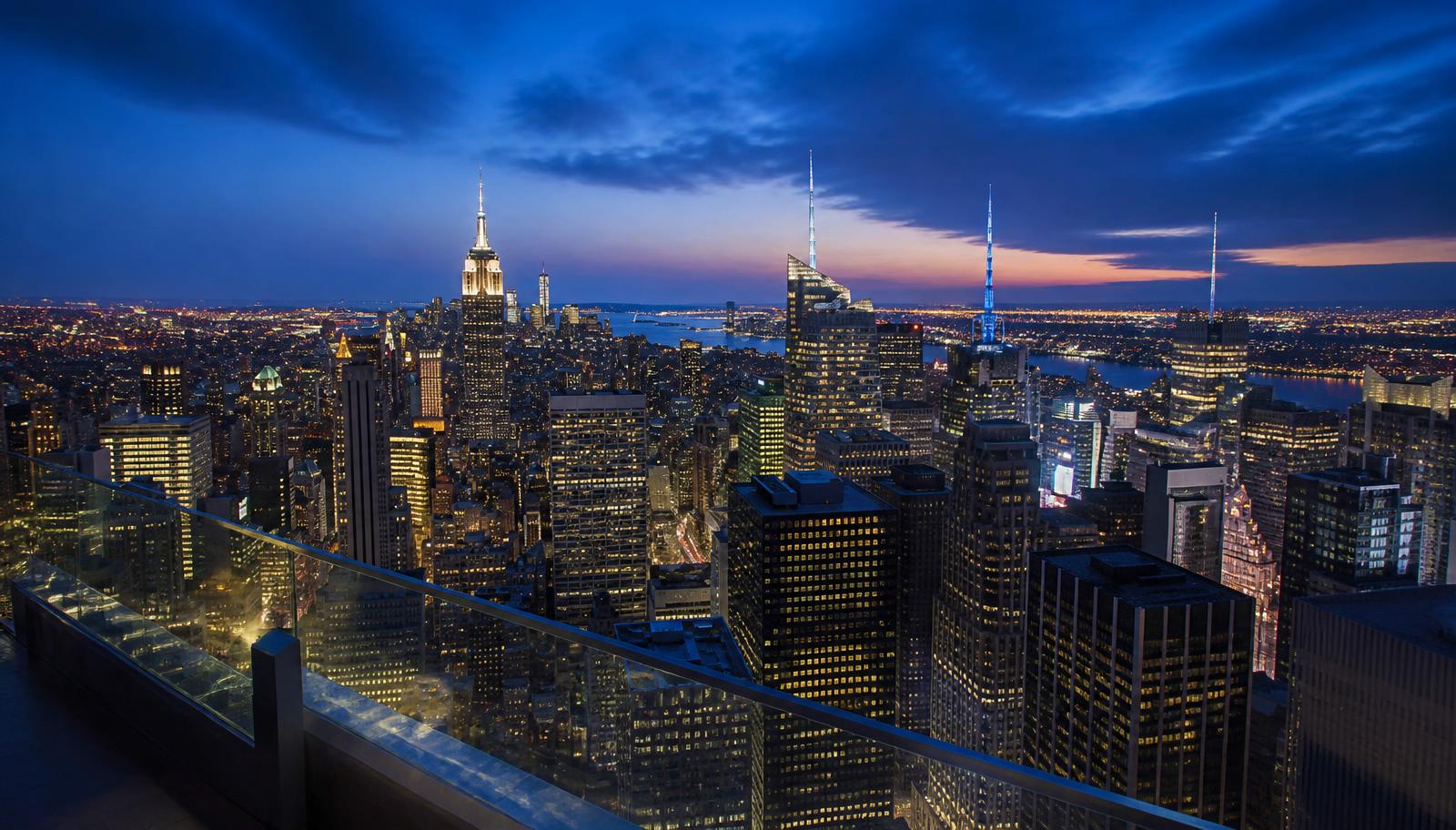
This is the most common single decision in New York planning, and it has a clean answer: if you want to photograph the skyline, go to Top of the Rock. If you want to stand on the landmark itself, go to the Empire State Building.
Everything else — height, crowds, ticket tiers, indoor space, sunset timing — refines that answer rather than overturning it. Below is what each deck actually gives you, who each one suits, and the planning details that decide whether your visit is memorable or just expensive.
We are a comparison and discovery site: we do not sell or issue admission tickets. Verify current hours, ticket tiers and any timed-entry rules on each attraction's official site before booking.
The short verdict
Choose Top of the Rock if this is your first New York trip and you want the classic photograph: Central Park filling the north view, the Empire State Building centered to the south, and open-air terraces without glass in the frame.
Choose the Empire State Building if the building itself is the point — the Art Deco lobby, the 1930s history, the 86th-floor open-air deck that has been in a century of films, and the option to go higher to the enclosed 102nd floor.
Choose neither if you already have a harbor cruise and a Brooklyn Bridge walk on your plan and are short on time. A deck is a view, not an activity; skipping it is a legitimate choice.
Do not choose both. The overlap is substantial and the second ticket almost always buys less than a guided walk or a boat trip would.
- Best photograph of the skyline: Top of the Rock.
- Best sense of standing on an icon: Empire State Building.
- Best value: whichever one you visit once, at the right hour.
What you actually see from each
Top of the Rock sits at Rockefeller Center in the middle of midtown, which is precisely why the view works. Looking north you get Central Park in full, edge to edge — the single view that no downtown or midtown-south deck can give you. Looking south you get the Empire State Building as the centerpiece of the skyline, with One World Trade behind it.
The Empire State Building looks out from further south, so Central Park sits further away and smaller, but midtown, the Chrysler Building, both rivers and, on clear days, a genuinely long view over Brooklyn, Queens and New Jersey open up. What you cannot see, of course, is the Empire State Building.
Downtown decks are a different product again: harbor, bridges and the statue rather than the classic midtown skyline. If your priority is water and the Financial District, a downtown view or a harbor cruise serves you better than either building in this comparison.
The differences that matter
Photography. Top of the Rock's terraces have sections without glass barriers, which is why photographers favor it. The Empire State Building's 86th floor is open-air with a safety fence; the 102nd floor is fully enclosed.
Height. The Empire State Building's upper deck is higher, and height changes the character of the view: more distance, less street-level detail. Higher is not automatically better for photographs.
Crowd shape. Both are busy at sunset. Rockefeller Center's terraces spread visitors across multiple levels, while the Empire State Building's queue is more sequential — lobby, elevators, deck — which is why arriving with a timed slot matters more there.
The building as an attraction. The Empire State Building includes exhibits about its construction and its place in New York's history, and the lobby is a genuine Art Deco landmark. Top of the Rock is a view with far less to read.
Weather exposure. Open-air decks in January are cold and in July are hot. An enclosed upper level is a real advantage in bad weather, and a real loss on a perfect evening.
The verified numbers, side by side
Top of the Rock occupies three stacked levels at Rockefeller Center — the 67th, 69th and 70th floors — with the top terrace roughly 850 feet above street level, confirmed on Rockefeller Center's own attraction page. The 67th level is partly glass-enclosed, the 69th is glassed, and the 70th is the fully open rooftop terrace where the unglazed photography sections are.
The Empire State Building has two observatories, confirmed on its official ticket page: the open-air 86th-floor deck at roughly 1,050 feet, and the enclosed 102nd-floor observatory at roughly 1,250 feet. The building's spire tip reaches about 1,454 feet, which is the figure usually quoted for the building rather than for any deck you can stand on.
So the honest height comparison is 850 feet versus 1,050 feet for the two open-air decks — a difference of about one fifth, not the gulf the 1,454-foot number implies.
Both attractions now sell experiences on top of standard admission. Rockefeller Center lists Skylift, a rotating open platform above the 70th-floor terrace, and The Beam, a seated photo experience recreating the 1932 construction photograph. The Empire State Building lists the 102nd-floor upgrade and early-access entry. These tiers have their own height, footwear and mobility conditions and they change more often than the views do, so confirm the current terms on each official site rather than assuming last year's rules.
- Top of the Rock: floors 67 / 69 / 70, top terrace approx. 850 ft, open rooftop on 70.
- Empire State Building: 86th floor approx. 1,050 ft open-air, 102nd floor approx. 1,250 ft enclosed.
- Add-ons to check before booking: Skylift and The Beam (Rockefeller Center); 102nd floor and early access (Empire State Building).
Who each option is best for
First-time visitors with one deck in the budget: Top of the Rock, for Central Park and the skyline photograph.
Photographers and anyone shooting at golden hour: Top of the Rock, for the unglazed sections and the southward composition.
History-minded travelers and film fans: the Empire State Building, where the building's story is half the visit.
Families with young children: the Empire State Building's structured route and indoor exhibits are easier to manage than open terraces in wind, though both work — our New York with kids guide covers pacing.
Repeat visitors who have already done both: a downtown view or a harbor cruise adds something new; a third midtown deck does not.
Where Edge, SUMMIT and the harbor fit in
Edge at Hudson Yards is an outdoor sky deck on the far west side, with a glass floor section and a view along the Hudson. It is a strong alternative if you want the west-side and river perspective, but midtown's landmark cluster sits behind you rather than in front.
SUMMIT One Vanderbilt, next to Grand Central, is as much an immersive mirrored installation as an observation deck. Choose it if the experience itself appeals; choose one of the two decks in this comparison if you primarily want a classic skyline view.
A harbor cruise is the best non-deck alternative and is not really competing: it gives you the statue, the bridges and the downtown skyline from the water, which no deck does. Many visitors get more from one deck plus one cruise than from two decks.
Our New York City observation decks collection compares guided and skip-the-line formats that clear our 1,000-plus traveler review threshold, with current pricing and inclusions confirmed on Viator.
The four-deck decision dimensions most comparisons skip
Once you widen the question to Empire State Building vs Top of the Rock vs Edge vs SUMMIT One Vanderbilt, height and price stop separating them. These are the dimensions that actually decide it, and they are the ones missing from most round-ups.
Open air vs glass. The Empire State Building's 86th floor and Top of the Rock's upper terraces put you in open air; Edge is an outdoor platform with an angled glass wall and a glass floor panel; SUMMIT is enclosed in floor-to-ceiling glass with mirrored floors. If you photograph through glass, reflections decide your evening more than altitude does.
Comfort in bad weather. SUMMIT and the Empire State Building's enclosed 102nd floor are the only two that hold up in rain, wind or a February cold snap. Edge and open terraces in a gale are a short visit.
Vertigo and sensory load. SUMMIT's mirrored floors and glass-floor elevator are genuinely difficult for some visitors, and Edge's glass floor panel and City Climb are self-selecting. The Empire State Building is the most conventional experience if anyone in your group is uneasy with height.
Add-on tiers. SUMMIT sells an outdoor Ascent glass elevator, Edge sells City Climb, and the Empire State Building sells 102nd-floor and early-access tiers. These have their own age, footwear and mobility rules, so check them before you book for a group rather than at the door.
Transit anchor. SUMMIT sits on Grand Central, Top of the Rock on Rockefeller Center, the Empire State Building on 34th Street, and Edge at the far west end of the 7 line. Whichever deck sits on the subway line you are already using costs you the least time, and time is the scarce resource on a short trip.
Passes. Multi-attraction New York passes include different decks in different tiers, and the deck you want may sit outside the tier you buy. Decide the deck first, then check whether a pass you were already considering happens to include it — never the other way round.
Second visits. Day-and-night or return-visit tickets exist at some decks and not others, and they change the value calculation if the forecast is uncertain. Confirm the current option on the attraction's own site; these tiers change more often than the views do.
- Photographing through glass: Top of the Rock or the Empire State Building's open-air 86th.
- Bad weather or extreme cold: SUMMIT, or the enclosed 102nd floor.
- Uneasy with heights: Empire State Building. Actively want the thrill: Edge or SUMMIT add-ons.
- Short trip: pick the deck on the line you are already riding.
Timing and planning
The best slot at either deck starts about an hour before sunset: you get daylight, the sunset itself and the lit skyline in one visit, which is the closest thing to two tickets for the price of one.
The second-best slot is the first entry of the morning, when both decks are at their quietest and the light is clean for northward photographs.
Weekend evenings and holiday weeks are the busiest windows at both. If your dates fall there, book the earliest or latest available slot rather than the convenient one.
Check visibility before you go. A deck on a low-cloud day is a paid view of fog; both attractions are worth rescheduling within your trip for a clear evening.
Allow ninety minutes door to door at Top of the Rock and closer to two hours at the Empire State Building if you include the exhibits.
- Best time: 60 minutes before sunset.
- Quietest time: first entry of the day.
- Always check the forecast for visibility, not just rain.
Common mistakes
Buying two decks for the same trip.
Booking a fixed date weeks ahead and losing the flexibility to chase clear weather.
Arriving at sunset without a timed slot on a weekend.
Expecting Central Park from the Empire State Building — it is there, but distant.
Treating a deck as the evening's whole plan. Pair it with dinner in the neighborhood; our New York at night guide covers what works after dark.
Common questions
- Is Top of the Rock or the Empire State Building better?
- Top of the Rock has the better view because it includes Central Park and the Empire State Building itself. The Empire State Building is the better visit if you care about the landmark, its history and going higher.
- Which has the better view of Central Park?
- Top of the Rock, clearly. It sits further north and its north terrace frames the entire park.
- Should I visit both?
- For most visitors, no. The views overlap heavily; a harbor cruise or a guided walking tour adds more to a trip than a second deck.
- What is the best time of day to go up?
- About an hour before sunset, so you see daylight, sunset and the illuminated skyline in a single visit. Early morning is the quietest alternative.
- How do Edge and SUMMIT compare?
- Edge gives a west-side and Hudson River perspective, and SUMMIT is an art-led immersive experience next to Grand Central. Neither replaces the classic midtown skyline view these two decks offer.
Fact check
Facts on this page were last checked against primary sources on . Admission rules, fees and closures change without notice, so we recheck the details below on a schedule and confirm them with the official operator or agency.
- Ticket tiers and timed-entry rules at each deck
- Day-and-night / second-visit ticket options
- Which decks are included in multi-attraction passes
- Accessibility and age rules for SUMMIT Ascent and Edge City Climb
Checked against: Empire State Building Observatory — visitTop of the Rock — visitSUMMIT One Vanderbilt — visitEdge at Hudson Yards — visit
Sources
Hours, fees, reservation rules and schedules change — confirm with the operator or agency before you travel.
Empire State Building — official visitor informationTop of the Rock — Rockefeller Center official siteEdge at Hudson Yards — official siteSUMMIT One Vanderbilt — official siteNYC Tourism — official visitor information
Top-reviewed observation decks
Only experiences with 1,000+ traveler reviews.

New York in One Day Guided Sightseeing Tour
Experience the best of New York City with a knowledgeable, licensed tour guide by your side. Our guides will make your journey unforgettable as they hop off the bus at each stop, giving you an exclusive and personalized sightseeing experience. Relax in the comfort of our climate-controlled tour buses, ensuring a cozy and enjoyable ride while staying protected from the unpredictable weather. Exp
Indicative from $99 — confirmed on Viator
Check availability on Viator
All-Access 9/11: Ground Zero Tour, Memorial and Museum, One World Observatory
Don't just see the landmarks; understand the legacy. This all-encompassing experience provides a chronological journey through one of history’s most significant days and the resilience that followed. Led by a local guide with personal ties to the events, you will explore the hallowed grounds of the Memorial, gain skip-the-line access to the 9/11 Museum, and end your journey 102 stories up at the O
Indicative from $109 — confirmed on Viator
Check availability on Viator
Half-Day Bus Tour of NYC Top Highlights
Experience New York City’s top sights in just half a day from the comfort of your seat, including Central Park, Rockefeller Center, and the Empire State Building. Capture amazing photos of the Brooklyn Bridge and Statue of Liberty. Learn fascinating stories from your expert guide as you visit the 9/11 Memorial and drive by other world-famous NYC sites. - Enjoy the comfort of a luxury bus with ama
Indicative from $65 — confirmed on Viator
Check availability on ViatorRelated guides
New York Itinerary: How to Plan 3, 4 or 5 Days in NYC
Most New York itineraries fail on geography, not ambition. Here is how to group the city into workable days — with 3-day, 4-day and 5-day versions.
New York at Night: Views, Walks and What to Do After Dark
New York changes character after sunset, and a well-planned night beats a packed day. Here is where the views are best and how to sequence an evening.
Best Observation Deck in NYC: All Five, Compared by View
New York has five paid high viewpoints and they show you five different cities. The choice is about what you want in the frame, not which building is tallest.