French Quarter Walking Tours: Which Type to Take, and When to Walk It Yourself
By America Experiences Editors · Published August 16, 2026 · 8 min read
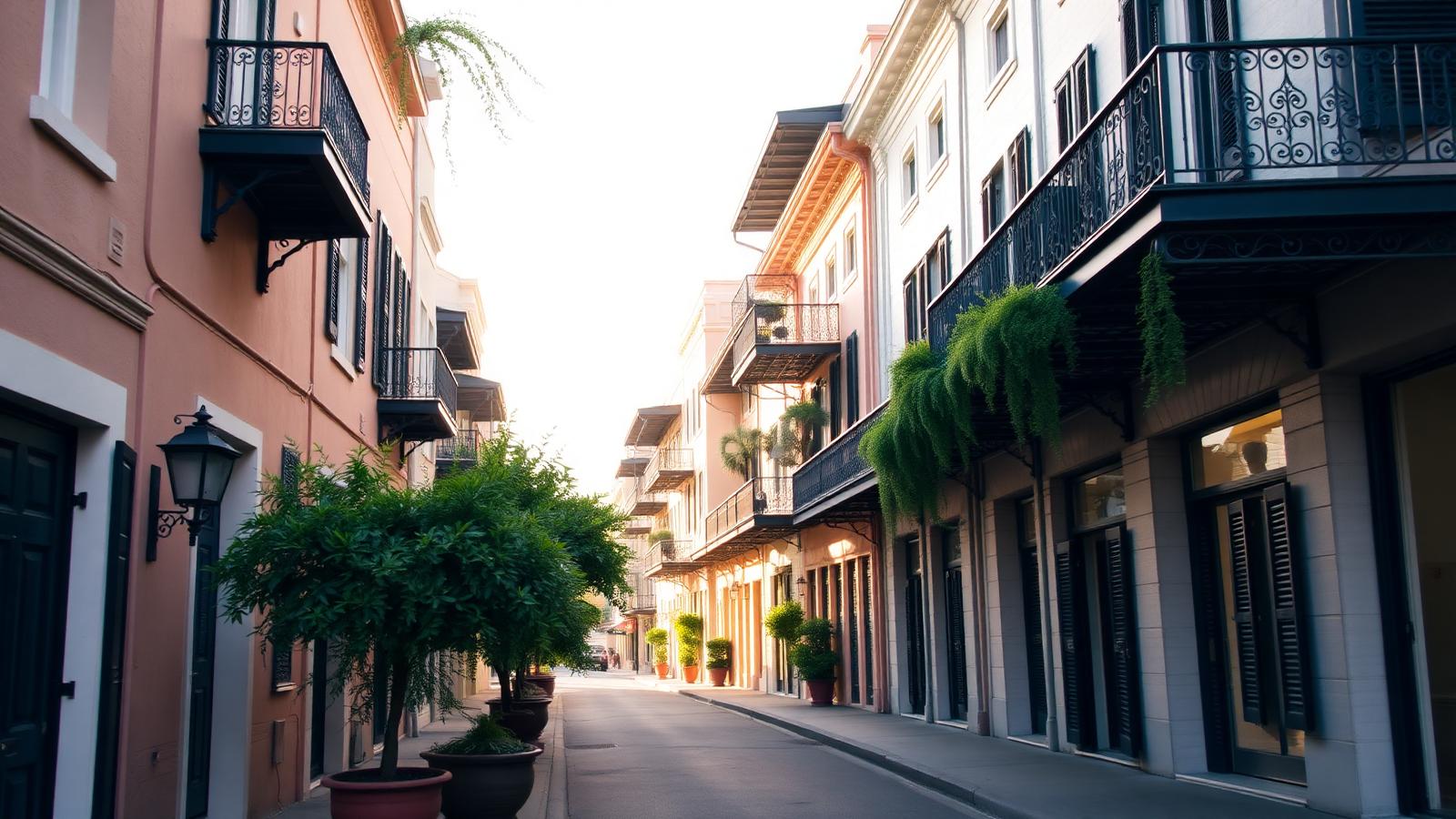
The French Quarter is small — roughly thirteen blocks along the river by six blocks deep — and you can cross it on foot in twenty minutes. That is exactly why guided walks work so well here, and also why so many of them look identical from the outside.
The difference between a memorable French Quarter tour and a forgettable one is almost never the route. It is the lens: whether you are being shown Spanish colonial architecture, Creole cooking, the birth of jazz, the legal history of the Quarter, or its ghost stories.
This guide sorts the tour types by what they actually deliver, flags the two hours of the day that change the experience most, and marks the parts of the Quarter that are better without a guide at all.
The tour types, and who each one suits
History and architecture walks are the baseline. A good one explains why the Quarter looks Spanish rather than French — the fires of the late 1700s rebuilt it under Spanish rule — and reads the buildings for you: courtyards, ironwork, dormers, the difference between a Creole townhouse and an American-era row.
Food tours are the highest-satisfaction format for most first-time visitors, because they solve a real problem. Choosing where to eat in the Quarter is genuinely hard, and a tasting walk gives you three or four anchors plus the vocabulary — gumbo versus étouffée, muffuletta, beignets — to order well for the rest of the trip.
Cocktail and bar-history walks are the Quarter's specialty subject, and the city's claim on the Sazerac and the invention of the American cocktail is a genuinely interesting thread. These start later and move slower; they are an evening activity, not a substitute for a history walk.
Music walks focus on Congo Square, Storyville and the lineage that produced jazz. They are the best value for anyone whose main reason for coming is the music, and they usually end near live venues on Frenchmen Street.
Cemetery and ghost tours are the most-booked category in New Orleans, and they are two different things. Cemetery tours are historical and now require licensed guides at St. Louis No. 1. Ghost tours are entertainment first — enjoyable if you take them in that spirit.
- History/architecture — best for context on a first visit.
- Food — best all-round value; solves where-to-eat.
- Cocktail — evening only, adults, slower pace.
- Music — Congo Square to jazz origins; pairs with a night out.
- Cemetery/ghost — atmosphere; check what access is included.
When to walk: the two hours that matter
Early morning is the Quarter at its best and least advertised. Before about 9am the streets are being washed, the light is low on the ironwork, and you can hear the neighborhood instead of the crowds. Any architecture-focused walk is better at this hour.
Late afternoon into early evening is the second window: the heat breaks, balconies fill and bars come alive. This is when food and cocktail walks make sense.
The hours to avoid for a walking tour are the middle of a summer afternoon. New Orleans humidity in July and August is a physical constraint, not a discomfort — you will remember the heat, not the history. Check the forecast and pick a morning slot in summer.
The city's biggest event weeks — Mardi Gras and the major festivals — transform the Quarter into a crowd-management exercise. Walks still run, but the experience is about the event, not the streets.
Comparing formats side by side
Duration is the honest differentiator. History walks typically run around two hours; food tours run longer because eating takes time; cocktail and ghost walks are usually shorter but later.
Group size changes the product more than the price does. In the Quarter's narrow sidewalks, a group of thirty means you spend the tour on the edge of earshot. Small-group formats are worth the premium here specifically.
Included versus not included is where confusion creeps in. On food tours, check whether tastings and drinks are included or paid on the day. On cemetery tours, check whether cemetery admission and a licensed guide are included.
Accessibility: the Quarter's sidewalks are uneven, high-kerbed and frequently under repair. If mobility is a factor, ask about the route before booking rather than after.
Our New Orleans food and music tours collection compares the tasting and music formats, and the ghost and cemetery tours collection covers the atmospheric ones. Both lists only include experiences with 1,000+ traveler reviews, which in a city with this many small operators is the fastest way to filter.
What you should walk yourself
Jackson Square, the St. Louis Cathedral exterior, the riverfront at Moon Walk and the length of Royal Street need no guide. They are self-explanatory, free and best at your own pace.
The French Market and the shops of Royal and Chartres are also better solo — a tour will walk you past them without time to browse.
Where a guide genuinely adds value: interpreting the buildings, the sections of history that are not visible on the street, cemeteries where a licensed guide is required, and food, where local knowledge is the product.
A reasonable plan for a first trip: one guided walk for context on day one, then two self-guided mornings using what you learned. Our New Orleans best time to visit guide covers which season makes those mornings comfortable.
Practical notes for walking the Quarter
Wear shoes with grip. The banquettes — the local term for sidewalks — are uneven flagstone and brick, and they are slick after rain.
Carry water in every season, not just summer. Humidity does most of the damage here.
Cash for tips is customary for guides, and some smaller operators run on a tip-based model. Read the listing so you know which you have booked.
Bourbon Street at night is a specific experience, not the whole Quarter, and it is not where most residents would send you. Frenchmen Street, just outside the Quarter, is where the live music culture is strongest.
Cemetery access rules have changed in recent years, including guide requirements at St. Louis Cemetery No. 1. Confirm current access rules with the Archdiocesan cemeteries office before assuming you can walk in.
Common questions
- How long is a typical French Quarter walking tour?
- Around two hours for history and architecture walks. Food tours run longer because of the tasting stops; cocktail and ghost walks are often shorter but start in the evening.
- Can you walk the French Quarter without a tour?
- Yes — it is compact, walkable and safe in daylight on the main streets. A guide adds most value for architecture, history that is not visible, cemeteries and food.
- Do you need a guide for St. Louis Cemetery No. 1?
- Access rules have tightened and a licensed guide has been required for general visitors. Confirm the current policy with the Archdiocese's cemeteries office before you go.
- What is the best time of day for a French Quarter walk?
- Early morning for architecture and quiet streets; late afternoon or early evening for food, bars and atmosphere. Avoid summer mid-afternoons.
- Are French Quarter ghost tours historically accurate?
- Treat them as entertainment with a historical setting. If historical accuracy is your priority, book a history or cemetery tour instead.
Sources
Hours, fees, reservation rules and schedules change — confirm with the operator or agency before you travel.
New Orleans & Company — French Quarter neighborhood guideNational Park Service — New Orleans Jazz National Historical ParkArchdiocese of New Orleans — cemeteries visitor informationVieux Carré Commission — French Quarter architecture and preservation
Top-reviewed food, jazz & steamboat
Only experiences with 1,000+ traveler reviews.

New Orleans Food Walking Tour of the French Quarter with Small-Group Option
Fall head over heels for the French Quarter, one delicious bite at a time! What pops your cork more than gumbo, oysters, and 300 years of history? This half day food tour -where flavor meets legacy and how we roll in New Orleans! Your passionate, knowledgeable guide leads you into the heart of the Quarter for tastings that read like a love letter to Creole and Cajun cooking. Including: -Rich tradi
Indicative from $82 — confirmed on Viator
Check availability on Viator
New Orleans Demonstration Cooking Class with Meal
Take an entertaining and informative cooking class at the New Orleans School of Cooking! Located in a renovated molasses warehouse built in the early 1800s, this cooking class brings you to the heart of New Orleans’ French Quarter. Learn the basics of Louisiana cooking from professional chefs and learn how to make classic New Orleans specialties such as gumbo, jambalaya and pralines. Enjoy the fin
Indicative from $45 — confirmed on Viator
Check availability on Viator
New Orleans Food and History Walking Tour
This New Orleans food tour has every culinary taste covered. With a history-savvy guide leading the way, you’ll walk from classic Creole restaurants and neighborhood sandwich shops to hot sauce bars and artisanal candy stores. Visit up to five locations to sample diverse foods representing the breadth of Louisiana’s culinary heritage, including dishes like seafood gumbo, po-boys, muffulettas and p
Indicative from $85 — confirmed on Viator
Check availability on ViatorRelated guides
New Orleans Cemetery Tour: Which Cemetery, and Why a Guide
New Orleans' most famous cemetery cannot be entered without an authorized guide. Here is which cemetery suits you and what a good tour actually explains.
Best Things to Do in New Orleans: A Decision Guide
New Orleans is a city where a guide genuinely changes what you see — and also a city with more low-quality tours than almost anywhere in the US. Here is the difference.
Best Ghost Tours in New Orleans: How to Pick the Right One
Nearly every French Quarter ghost tour walks the same six blocks. What separates them is group size, whether alcohol is allowed and how much of the storytelling is history.