Best Swamp Tours in New Orleans: Airboat vs Covered Boat
By America Experiences Editors · Published August 22, 2026 · Updated August 27, 2026 · 9 min read
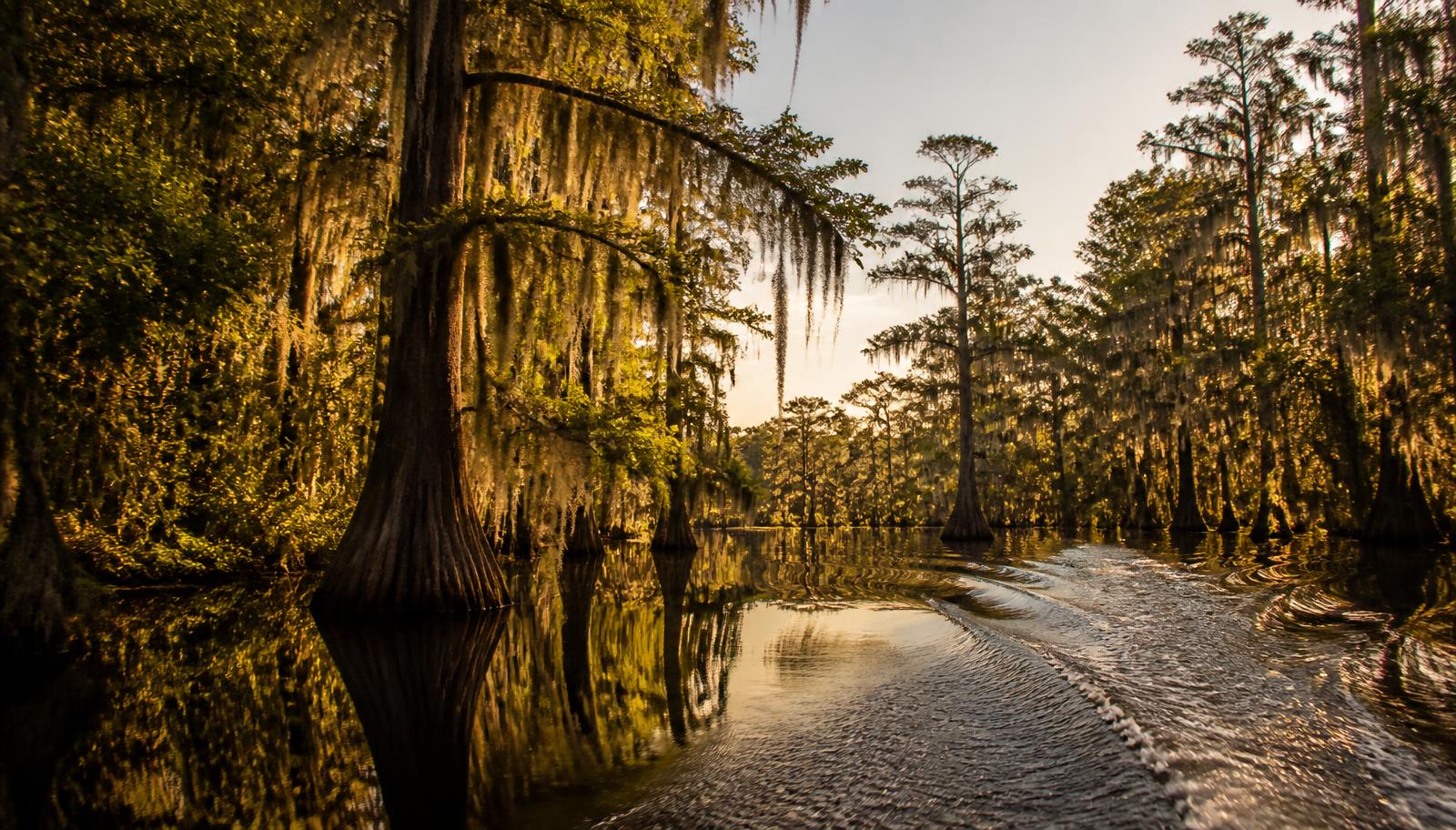
The swamps south and west of New Orleans are about 45 minutes from the French Quarter, which means the tour itself is rarely the longest part of your day. Total time on a swamp trip ranges from two hours to nearly eight, and the difference is almost entirely transport and add-ons.
Two format decisions do the real work. Airboat or covered boat determines the noise, the speed and where you can go. Hotel pickup or self-drive determines whether you spend two hours or five.
Every tour we shortlist has at least 1,000 traveler reviews, which matters here because wildlife sightings are variable and only a large review base shows you what a typical trip looks like rather than a lucky one.
Verified conditions · primary sources only
What the agencies actually say right now
Every figure in this section was read on the issuing agency’s own page on . Nothing here comes from an operator, a review platform or a booking site.
Can you see the swamp for free instead?
The free DIY swamp walk near New Orleans is largely closed for construction until roughly 2028.
The National Park Service states that Hurricane Ida caused significant damage to trails in the Barataria Preserve, and that beginning February 2, 2026 the visitor center and most trails closed for demolition and construction, work expected to take approximately two years.
- Entrance fee
- Free — no entrance fee and no entrance pass required
- Still open
- Twin Canals Trail · The Barataria Preserve parking lot · The canoe launch
- NPS says alligators are usually visible from the trails on its guided hikes along the Wetland Trace trail in the town of Lafitte, offered at 1:00 pm Wednesday and Thursday.
- At the Barataria Preserve itself, NPS says you may be able to see alligators along the Twin Canals Trail.
- Park services have moved to a Wednesday and Thursday 10:00 am – 2:00 pm schedule at the Lafitte Barataria Museum and Wetland Trace.
Barataria Preserve trail lengths
From the official park trail map. These are standard-conditions lengths, not current access — most of these trails are inside the construction closure above.
- Bayou Coquille Trail— 0.5 mi one way
- Marsh Overlook Trail— 0.4 mi(NPS lists alligators and wading birds as the highlight)
- Visitor Center Trail— 0.25 mi
- Palmetto Trail— 0.9 mi
- Ring Levee Trail— 0.6 mi(NPS notes alligator viewing during high water)
Month-by-month temperature, from NOAA
Average daily air temperature at New Orleans International Airport, 1991–2020 normals. Annual average 70.5 °F. This is air temperature, not water temperature, and it is not an alligator-activity threshold.
| Month | Average daily temperature |
|---|---|
| January | 54.3 °F |
| February | 58.0 °F |
| March | 63.8 °F |
| April | 70.1 °F |
| May | 77.1 °F |
| June | 82.4 °F |
| July | 83.9 °F |
| August | 84.0 °F |
| September | 80.8 °F |
| October | 72.5 °F |
| November | 62.4 °F |
| December | 56.6 °F |
Why nobody can give you a sighting forecast
There is no current public water-temperature reading for the Barataria Basin.
USGS site 07380251 (Barataria Bay north of Grand Isle) does list parameter 00010, temperature of water, among its available parameters, but with a period of record ending 2021-08-29, and the station page returns no data for the current period.
Feeding alligators
Feeding wildlife in the park is strictly prohibited. Alligators and other wild animals are fast, unpredictable, and potentially dangerous. Feeding them puts both you and the animals at risk by causing them to lose their natural fear of humans.
National Park Service, Jean Lafitte NHP&P. Some tour boats do attract alligators; that is the operator’s practice on state and private water and is not covered by this park rule.
Methodology and what we could not verify
We only publish a figure if we read it on the issuing agency’s page. These widely repeated claims did not clear that bar, so we are not stating them:
A specific water or air temperature below which American alligators stop feeding or become dormant.
The Louisiana Department of Wildlife and Fisheries website returned HTTP 403 to every retrieval attempt on 2026-08-27, so we could not read its wording. We will not quote a threshold we have not read on the agency's own page.
A Louisiana alligator nesting and hatching calendar by month.
Not found on an LDWF or U.S. Fish and Wildlife Service page. Only third-party and academic sources carried one, which is not good enough to publish as a rule.
How often New Orleans actually gets afternoon thunderstorms in summer.
No weather.gov page states a thunderstorm-frequency statistic for New Orleans, so we cite only the temperature normals that NWS does publish.
Any operator's alligator sighting rate.
No operator publishes one, and no agency audits one. Wildlife sightings cannot be guaranteed by anybody.
Sources
- Jean Lafitte NHP&P — Barataria Preserve FAQ — National Park Service
- Jean Lafitte NHP&P — Fees and passes — National Park Service
- Barataria Preserve official trail map (Feb 2015) — National Park Service
- NWS New Orleans — 1991–2020 climate normals, New Orleans International (MSY) — NOAA / National Weather Service
- USGS 07380251 — Barataria Bay N of Grand Isle, LA — U.S. Geological Survey
The short answer
Take an airboat if the ride is the point. They are fast, loud, reach the narrow back channels a pontoon cannot, and require ear protection, which operators supply. Small-group airboats are the most expensive option per person and the most enthusiastically reviewed.
Take a covered pontoon if wildlife, commentary and comfort matter more than adrenaline. They are quieter, shaded, cheaper, better for young children and older travellers, and easier to hear the guide on.
- Best overall value: a covered boat tour with round-trip transport from the city.
- Best if you have a car: a self-transport bayou tour — often little more than half the price.
- Best ride: a small-group airboat with pickup.
- Best combined day: a swamp boat paired with a River Road plantation visit.
- Best for very young children: a shorter covered boat trip, not an airboat.
Airboat vs covered boat, honestly
Airboats seat six to twenty depending on the operator and run at speed across open water and shallow grass. The noise is the defining feature — conversation is impossible under way, and guides talk during stops instead. Reviews of small-group airboats are consistently the strongest in the category; reviews of large airboats split on whether people could hear anything.
Covered pontoon boats move slowly, stay in the cypress channels and idle when there is something to look at. Guides on these tours narrate continuously, which is why they attract the highest ratings from travellers who came for the ecology rather than the ride.
Neither is better at spotting alligators. Sighting odds are driven by water temperature, not by hull design.
Season decides what you will actually see
Alligators are ectothermic and effectively dormant when water temperatures drop. From roughly November through February, sightings become unreliable and many honest operators say so; birds, on the other hand, are excellent in winter.
March through October is alligator season, with the highest activity from late spring through summer. Summer also brings heat, humidity and near-daily afternoon thunderstorms, so a morning departure is materially more comfortable than an afternoon one.
Do not book a swamp tour in winter expecting alligators. Book it for the cypress, the birds and the quiet, or move the tour to a different trip.
One caveat on all of this: no agency publishes a sighting forecast, and we could not verify a specific temperature threshold against a primary source. The verified conditions section above sets out exactly what the National Park Service, NOAA and USGS do and do not say.
- March–October: reliable alligator activity.
- June–September: hottest and wettest — take the first departure of the day.
- November–February: excellent birdlife, unreliable alligators.
Hotel pickup is the biggest hidden cost
Round-trip transport from downtown typically adds 60 to 90 minutes of driving and a significant premium. On several operators, the identical boat tour costs less than half as much if you drive yourself to the dock.
If you have a rental car, self-drive. If you do not, compare the pickup version against a rideshare each way before assuming the bundled transport is cheaper — for two or more people it often is not.
Combining a swamp tour with a plantation
The River Road plantation houses sit between New Orleans and the swamps, which is why combined tours exist. They run six to nine hours and are the most efficient way to see both without a car.
They are long days, and both halves are shortened relative to the standalone versions. Take the combination if your trip is short; take them separately if you have two free days.
Practical notes
Bring insect repellent between April and October, sun protection year-round, and a light layer for airboats — the wind chills quickly even in warm weather.
Airboats supply ear protection and require it. Most operators have minimum age limits on airboats; covered boats generally do not.
- Tours run in light rain; lightning cancels them, and operators reschedule or refund.
- Docks are 40–60 minutes from the Quarter — build the drive into your day.
- Wildlife is wild: no operator can guarantee an alligator.
Common questions
- Is an airboat or a covered boat better for a swamp tour?
- An airboat is better for the ride and reaches narrower channels; a covered pontoon is better for hearing the guide, staying shaded and travelling with small children. Alligator sightings do not depend on which you choose.
- What is the best time of year for a New Orleans swamp tour?
- March through October, when water temperatures keep alligators active. Winter tours are still worthwhile for birdlife and cypress scenery, but alligator sightings become unreliable.
- How long does a swamp tour take in total?
- Two hours if you drive yourself to the dock, four to five with round-trip transport from downtown, and six to nine if you combine it with a plantation visit.
- Are swamp tours safe for young children?
- Covered boat tours generally are, and many families take them. Airboats are loud enough to require ear protection and usually carry a minimum age, so check the listing.
- Do you need a car for a swamp tour?
- No — several operators include hotel pickup. But the self-transport version of the same tour is often close to half the price, so a rental car or a rideshare can be cheaper for two or more people.
- Can you see alligators near New Orleans without booking a tour?
- Normally yes, on the free trails at the Barataria Preserve, part of Jean Lafitte National Historical Park and Preserve — there is no entrance fee. But the National Park Service says that from February 2, 2026 the visitor center and most trails closed for demolition and construction expected to take about two years, leaving only the Twin Canals Trail, the parking lot and the canoe launch open. The park also runs guided hikes at the Wetland Trace trail in Lafitte at 1:00 pm on Wednesdays and Thursdays, where it says alligators are usually visible from the trails.
- Can anyone tell you how likely you are to see an alligator on a given day?
- No. There is no current public water-temperature reading for the Barataria Basin — the USGS station in Barataria Bay lists water temperature among its parameters but its record ends in 2021 and it reports no current data. No operator publishes a sighting rate and no agency audits one.
Sources
Hours, fees, reservation rules and schedules change — confirm with the operator or agency before you travel.
Jean Lafitte NHP&P — Barataria Preserve FAQ (closures, alligator viewing, feeding rule)Jean Lafitte NHP&P — fees and passesBarataria Preserve official trail map (NPS)NWS New Orleans — 1991–2020 climate normals (MSY)USGS 07380251 — Barataria Bay N of Grand Isle, LA
Top-reviewed swamp & bayou tours
Only experiences with 1,000+ traveler reviews.

New Orleans Swamp and Bayou Boat Tour with Transportation
Leave the French Quarter behind and spend the day in Honey Island Swamp, one of Louisiana’s most pristine protected wetlands, on a 2-hour guided boat tour with round-trip transportation from New Orleans. Unlike louder airboat-style tours, Cajun Encounters uses small, quiet 22-passenger flat-bottom boats that can slip into narrow cypress-lined waterways — giving you a closer, more natural way to lo
Indicative from $76 — confirmed on Viator
Check availability on Viator
New Orleans Airboat Ride
Take a break from the hustle-bustle of New Orleans and escape to nature on this exhilarating, family-friendly airboat ride! Spot alligators, snakes, turtles, egrets and herons as you take a fast, fun ride over a tidewater cypress swamp close to Jean Lafitte National Historical Park and Preserve. Admire moss-covered cypress and tupelo-gum trees as you explore bayous teeming with life and take advan
Indicative from $50 — confirmed on Viator
Check availability on Viator
New Orleans Self-Transport Swamp and Bayou Boat Tour
Take a short drive from New Orleans to visit Honey Island Swamp, a wildlife preserve that is one of the last protected wetlands in Louisiana, during a 2-hour boat tour. Visit a Cajun village only accessible by boat; learn about the animals and plants in the lush swamps; and get close to wildlife with an expert local guide. This tour does not include transportation.
Indicative from $43 — confirmed on Viator
Check availability on ViatorRelated guides
Best Things to Do in New Orleans: A Decision Guide
New Orleans is a city where a guide genuinely changes what you see — and also a city with more low-quality tours than almost anywhere in the US. Here is the difference.
French Quarter Walking Tours: Which Type to Take, and When to Walk It Yourself
The French Quarter is thirteen blocks by six. What changes between tours is not the route but the lens: architecture, food, music, law, or the supernatural.
Things to Do in Washington DC: What Needs Booking and What Is Free
Washington is the rare US city where the headline sights cost nothing. The skill is knowing the handful of places that need a reservation weeks ahead — and where a guided tour genuinely saves the day.